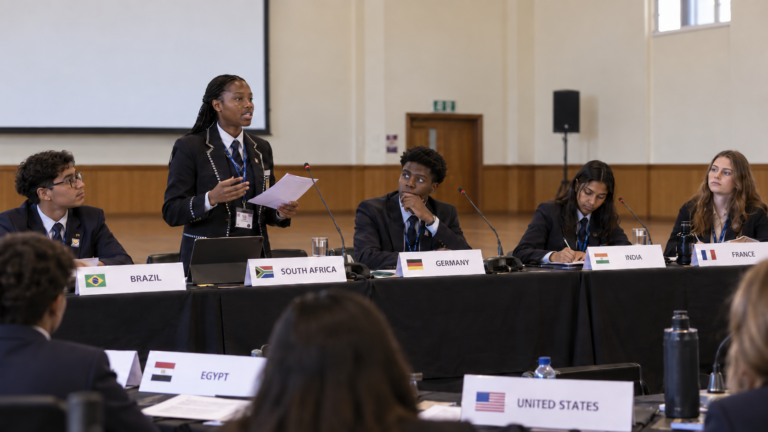
👋 Welcome Young Diplomats!
Climate change and pollution are some of the biggest challenges facing our planet today. In this Model United Nations debate, you’ll discuss whether countries that pollute more should pay more money to help clean up the Earth’s environment. This is a real issue that world leaders debate every day!
🔎 Understanding the Issue
What is Environmental Pollution?
Environmental pollution happens when harmful substances are released into our air, water, or land. The main types include:
Air pollution: Smoke from factories, cars, and power plants
Water pollution: Chemicals and waste dumped into rivers and oceans
Land pollution: Garbage and toxic materials buried in the ground
Climate change: Greenhouse gases that warm our planet
Why Does This Matter?
Pollution affects everyone on Earth by:
Making people sick with breathing problems and diseases
Killing fish, animals, and plants
Melting ice caps and raising sea levels
Creating extreme weather like hurricanes and droughts
Making farmland less productive
The Big Question: Who Should Pay?
Some countries produce much more pollution than others. Should the biggest polluters pay the most to fix environmental problems around the world?

🌐 Different Country Perspectives
Developed/Rich Countries (USA, Germany, Japan, UK, France)
Arguments:
“We’ve already started reducing our pollution and investing in clean energy.”
“Our companies create jobs and economic growth that benefit everyone.”
“We provide technology and knowledge to help other countries.”
“Historical pollution helped create medicines and inventions that benefit the whole world.”
“We’re already giving money for environmental projects.”
Concerns:
Worry about hurting their economies and losing jobs
Don’t want to be blamed for all environmental problems
Want other countries to also take responsibility
Developing Countries (India, Brazil, Nigeria, Bangladesh)
Arguments:
“Rich countries polluted first while becoming wealthy — now it’s our turn to develop.”
“We need factories and industry to lift our people out of poverty.”
“Our pollution per person is still much lower than rich countries.”
“We didn’t cause most of the historical pollution in the atmosphere.”
“We need help to afford clean technology.”
Concerns:
Don’t want environmental rules to keep them poor
Need economic growth to provide jobs and basic needs
Clean technology is often too expensive

Small Island Nations (Maldives, Tuvalu, Marshall Islands)
Arguments:
“Our countries might disappear underwater due to climate change.”
“We produce almost no pollution but suffer the most consequences.”
“Rich countries must help us adapt and survive.”
“This is a matter of life or death for our people.”
Position: Strongly support making big polluters pay more; want immediate action and financial help.
Major Emerging Powers
China: “We’re the world’s largest renewable energy producer. Our pollution per person is still lower than many rich countries. We’re willing to help, but everyone must contribute fairly.”
Russia: “Our vast forests absorb carbon dioxide. Cold countries need more energy for heating. Economic sanctions shouldn’t interfere with environmental cooperation.”
Oil-Producing Countries (Saudi Arabia, UAE, Iran)
Arguments:
“Oil and gas are still necessary for the world economy.”
“We’re investing in renewable energy too.”
“Economic transitions take time.”
“Energy security is important for all countries.”
📊 Key Facts and Numbers
Top Polluters (CO₂ emissions today): China (30%), USA (14%), India (7%), Russia (5%), Japan (3%)
Historical Polluters: USA and Europe produced enormous amounts since 1850
Pollution per person: USA (16 tons), China (7 tons), India (2 tons), Chad (0.1 tons).
💡 Different Solutions Being Discussed
Carbon Taxes – Countries pay based on how much they pollute
Cap and Trade – Countries that pollute less can sell credits to others
Technology Sharing – Rich countries share clean tech with poorer ones
Green Climate Fund – Countries contribute based on wealth and pollution.
✅ Arguments FOR Making Big Polluters Pay
Polluter Pays Principle: If you make the mess, you should clean it up.
Ability to Pay: Rich countries can afford it more than poor ones.
Historical Responsibility: Wealthy nations polluted for 200+ years and became rich doing so.
❌ Arguments AGAINST Making Big Polluters Pay
Economic Fairness: Might hurt jobs and competitiveness.
Current vs. Historical: Today’s biggest polluters aren’t always the historical ones.
Shared Responsibility: Everyone must contribute since climate change affects all.
❓ Questions to Consider in Debate
Is it fair to make countries pay for pollution their great-grandparents created?
Should a poor country polluting today pay the same as a rich country?
Should countries with forests that absorb CO₂ pay less?
What’s more important: fairness in payment or quick solutions?
🎤 Tips for Effective Debating
Resarch your country: Economy, emissions, needs.
Use evidence: Facts, numbers, comparisons.
Find common ground: Build alliances and compromise.
Address counter-arguments: Be ready with responses.
Sample Statements:
USA: “We’ve invested billions in clean energy but all major economies must contribute.”
India: “We need to grow to meet our people’s needs — rich nations must do more.”
Maldives: “This is life or death — we need immediate action from big polluters.”
This debate is about fairness, responsibility, and teamwork across nations. All sides have valid concerns. The best solutions may come from compromise and creative thinking.
As young diplomats, remember: you represent your country’s official position, not your personal views. Do your research, speak with confidence, and work towards solutions that make the world a better place!
✍️ Sign up
Join us at the upcoming 27 September 2025 Johannesburg Primary School Model United Nations at SAHETI School. We will also be having a training workshop on the 6th of September in which we will equip delegates with the tools to best participate at an MUN.