Give Your Learners a Seat at the Global Table
What rules should govern Artificial Intelligence?
Who should decide how AI is developed and used?
And how do we ensure that the benefits of AI are shared fairly across the world?
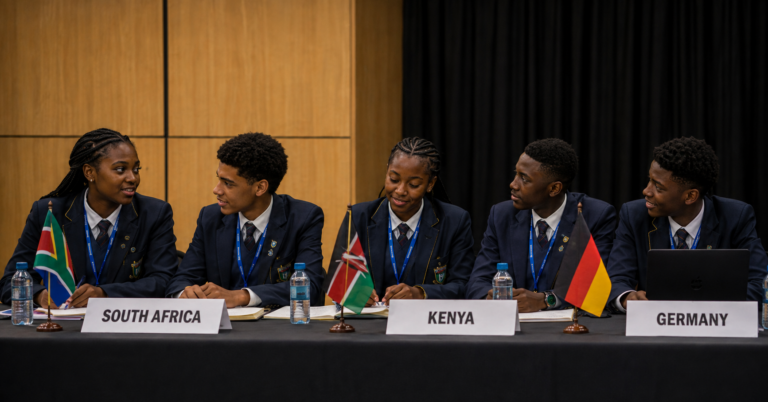
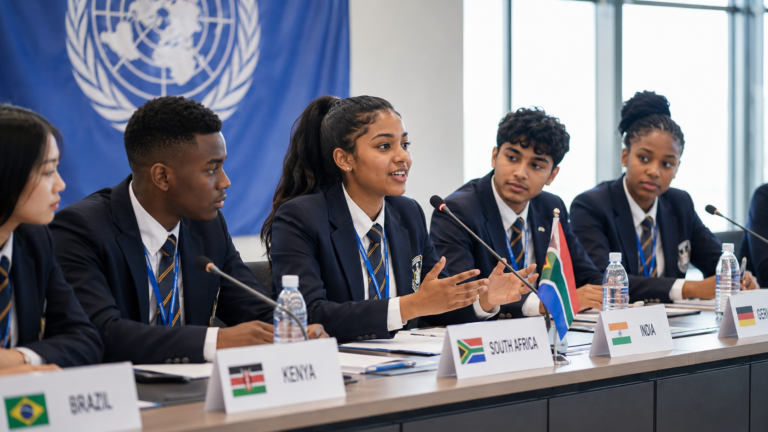
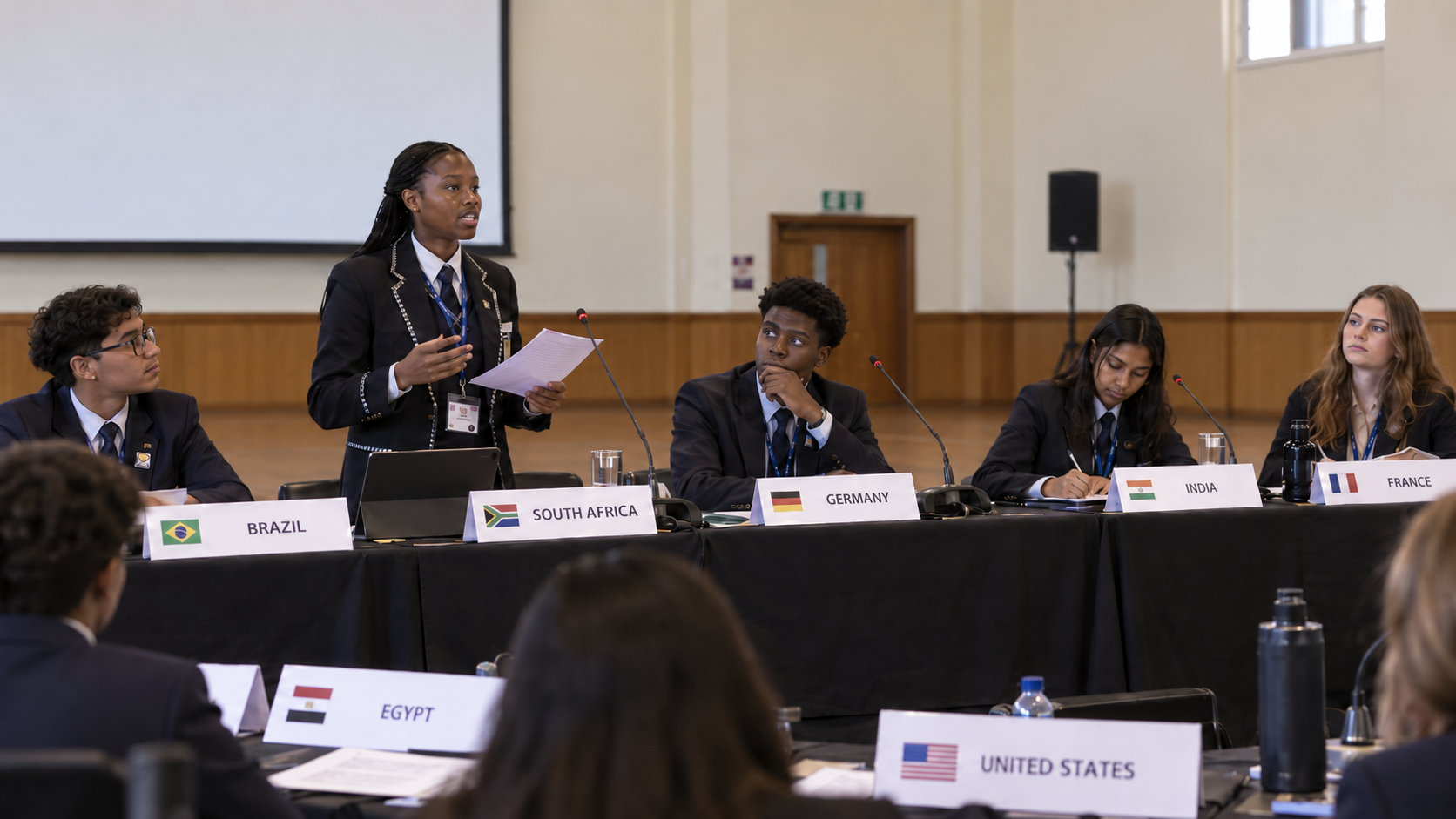
On Saturday, 17 October 2026, high school learners from across Johannesburg and surrounding areas are invited to step into the role of international diplomats at the next EduFleek High School Model United Nations Conference, hosted at De La Salle Holy Cross College High School.
This conference will challenge learners to debate one of the most important questions facing their generation:
Establishing Global Rules for Artificial Intelligence: Balancing Innovation, Human Rights and Equal Access
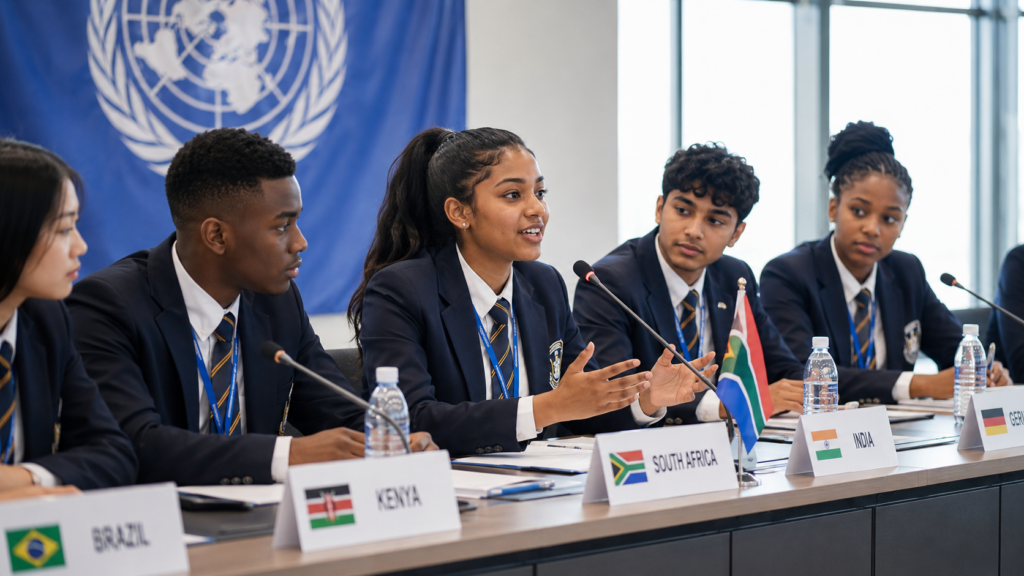
Delegates will represent different countries, research their assigned nation’s interests, debate competing approaches to Artificial Intelligence and work with other countries to develop a global response.
No previous Model United Nations experience is required. Learners will receive guidance and preparation materials ahead of the conference.
Conference Details
Date: Saturday, 17 October 2026
Venue: De La Salle Holy Cross College High School
Address: 2–22 Road Number 3, Victory Park, Randburg, 2195
Cost: R299 per delegate
Educators: Two educators per school may attend free of charge
Each conference session is limited to 40 delegates, giving every learner a meaningful opportunity to participate in debate, negotiation and resolution drafting.
Choose Your Preferred Session
Schools may register learners for either of the following sessions:
Morning Session
8:00 am – 12:00 pm
Afternoon Session
12:30 pm – 4:30 pm
Places are limited and session availability will be confirmed on a first-come, first-served basis.

The Question Your Learners Will Be Asked to Solve
Artificial Intelligence is already changing the way people learn, work, communicate, create content and access information.
However, countries do not all have the same resources, technology, laws or priorities.
Some governments may want to encourage rapid AI innovation and investment. Others may place greater emphasis on privacy, safety and regulation. Developing countries may question whether they will have equal access to the technology, infrastructure and opportunities created by AI.
There are also difficult questions around human rights, misinformation, employment, education, data privacy and accountability.
That gives delegates a major diplomatic challenge:
How can the international community create rules for Artificial Intelligence without preventing innovation — while also protecting people and ensuring that developing countries are not left behind?
There is no single obvious answer.
That is exactly what makes this an exciting Model United Nations debate.
What Will Learners Debate?
Delegates may be challenged to consider questions such as:
- Should there be international minimum standards for the development and use of Artificial Intelligence?
- Who should be held responsible when AI systems cause harm?
- How should countries protect privacy and personal data?
- Should people always be told when they are interacting with AI or viewing AI-generated content?
- How should governments respond to deepfakes and AI-generated misinformation?
- What protections should apply to children and young people?
- Could AI widen the gap between wealthier and developing nations?
- How can developing countries gain greater access to AI technology, infrastructure and skills?
- How should countries balance AI innovation with human rights and public safety?
- What role should international organisations play in governing AI?
Delegates will not simply discuss these questions from their own point of view.
They will need to understand and defend the interests of the country they have been assigned to represent.
What Is Model United Nations?
Model United Nations, commonly known as MUN, is an academic simulation of the United Nations.
Students take on the role of diplomats representing different countries and debate real international issues.
They must research their country’s position, present arguments, respond to other delegates, negotiate agreements and ultimately work together to develop resolutions.
MUN goes far beyond traditional debating.
Learners must learn when to defend their position, when to negotiate and when to compromise in order to achieve an outcome that other countries can support.

Why Should Your School Participate?
Build Confident Public Speakers
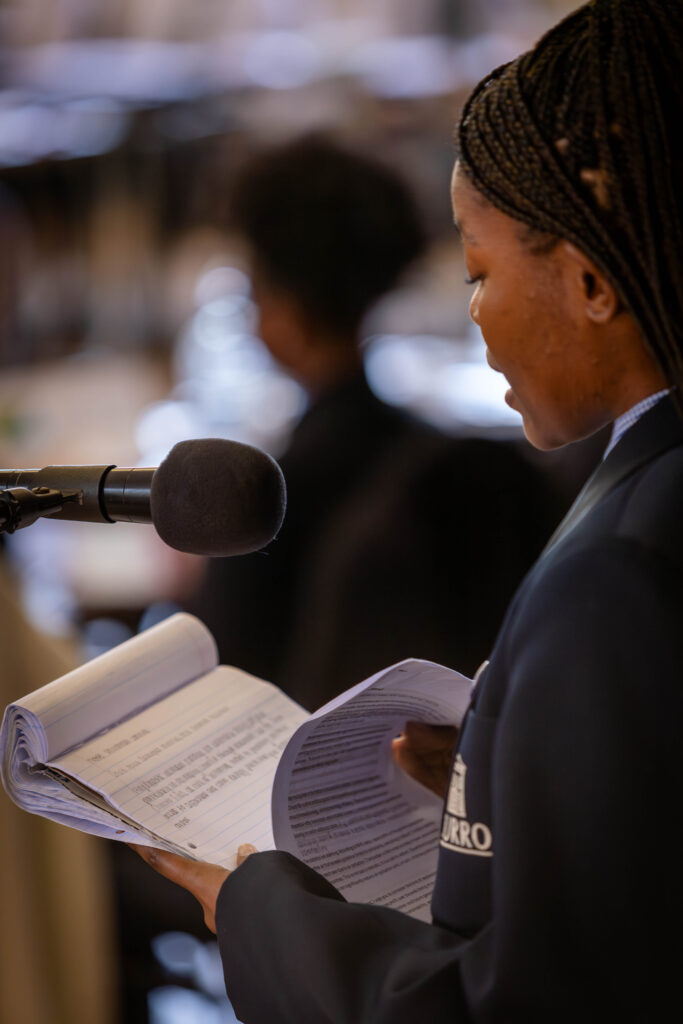
Learners are given a structured environment in which to speak in front of others, present arguments and respond to questions.
For many students, MUN becomes one of the places where they discover that they are capable of speaking confidently in a room full of people.
Develop Critical Thinking
AI governance does not have simple answers.
Delegates will have to weigh innovation against regulation, individual rights against national interests and technological progress against unequal access.
They must analyse competing arguments rather than simply memorise information.
Strengthen Research Skills
Every delegate must understand the country they represent.
Learners will research its economy, technological capabilities, international relationships, existing approach to AI and broader national interests before deciding what positions they should defend.
Learn Diplomacy and Negotiation
Winning an argument is not always enough.
Delegates must persuade other countries, build alliances, negotiate wording and find areas of compromise.
Engage With Technology Beyond the Classroom
Young people are already growing up alongside Artificial Intelligence.
This conference gives them an opportunity to move beyond simply using AI and begin thinking critically about how it should shape the future.
Prepare for Future Leadership
The skills developed through Model United Nations are valuable far beyond the conference room.
Research, public speaking, critical thinking, negotiation, collaboration and problem-solving are relevant to university study and future careers across fields including:
Law, technology, engineering, business, economics, international relations, politics, journalism, entrepreneurship, public policy and diplomacy.
Who Should Attend?
The conference is open to high school learners and is particularly well suited to students interested in:
- Artificial Intelligence and technology
- Current affairs
- Debate and public speaking
- Business and economics
- Law and human rights
- International relations
- Politics and public policy
- Entrepreneurship
- Leadership
- Problem-solving
- Science and innovation
Learners do not need previous debating or Model United Nations experience to participate.
First-time delegates are welcome.
Register Your School
Complete the registration form below to express your school’s interest.
Please provide:
- The school’s name
- The coordinating educator’s details
- The estimated number of participating learners
- Your preferred session
- Any additional questions or requirements
Once the form has been submitted, the EduFleek team will contact your school to confirm availability, explain the next steps and arrange country allocations.
Places are limited and will be allocated on a first-come, first-served basis.