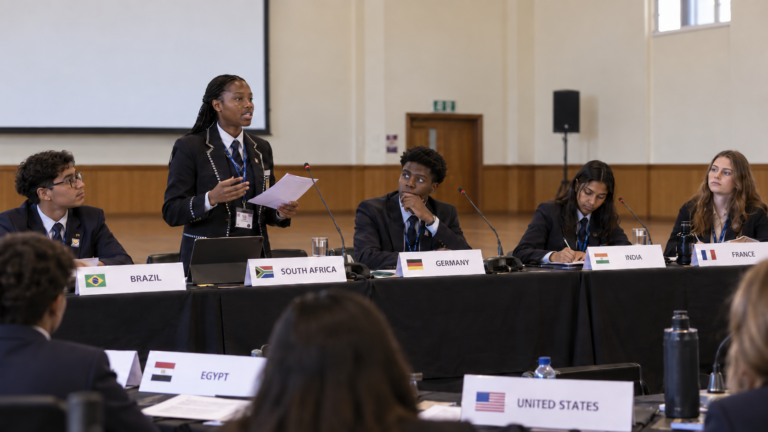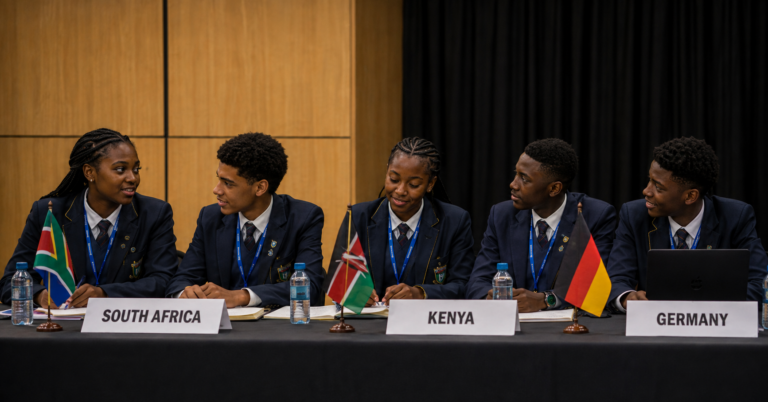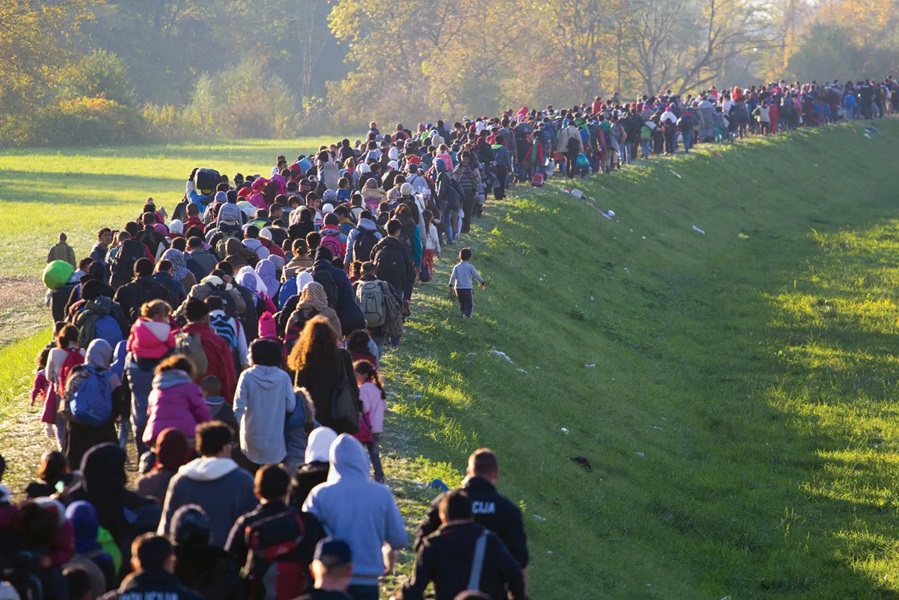
In the upcoming EduFleek High School Model United Nations conferences, delegates will debate one of the most important humanitarian challenges facing the world:
Addressing the Protection of Refugees and Internally Displaced Persons Affected by Conflict and Humanitarian Crises.
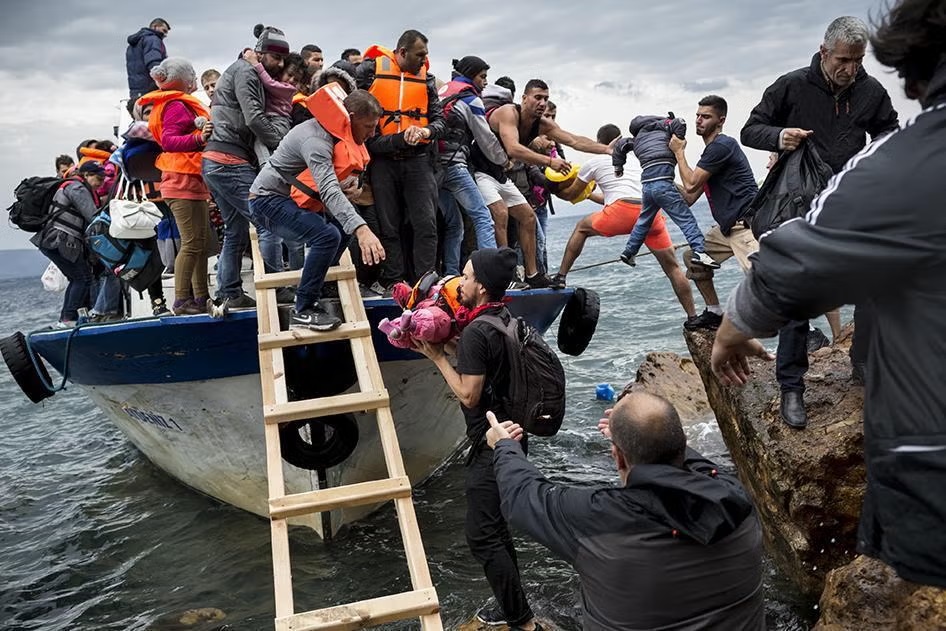
Around the world, war, persecution, violence and humanitarian emergencies are forcing millions of people to leave their homes. Some cross international borders in search of safety. Others flee to another town, province or region but remain within their own country.
For Model United Nations delegates, this is not simply a debate about providing food, tents or emergency aid. It is a debate about human rights, international law, national sovereignty, border security, humanitarian access, funding, education, healthcare and what should happen to people who may be unable to return home for many years.
This article will help you understand the topic, research the position of your assigned country and develop practical solutions that you can bring into the debate.
Why This Topic Matters
Forced displacement remains one of the largest humanitarian challenges in the world.
According to UNHCR’s latest full annual figures, 117.8 million people were forcibly displaced worldwide at the end of 2025. This included approximately 41.6 million refugees and 68.7 million people internally displaced because of conflict and violence. That means roughly one in every 70 people in the world was forcibly displaced.
The total number fell from the record level recorded at the end of 2024, partly because millions of refugees and internally displaced people returned home during 2025. However, UNHCR warns that many of these returns took place in difficult conditions, including areas where security, infrastructure and basic services remained weak.
So a falling number does not necessarily mean that the problem has been solved.
Another important fact for delegates is that refugee protection is not mainly a responsibility carried by wealthy countries far from conflict zones. At the end of 2025, 65% of refugees and other people in need of international protection were hosted in countries neighbouring their countries of origin, while 68% were hosted by low- and middle-income countries.
This creates one of the central questions for the debate:
How should responsibility for protecting displaced people be shared fairly between countries?
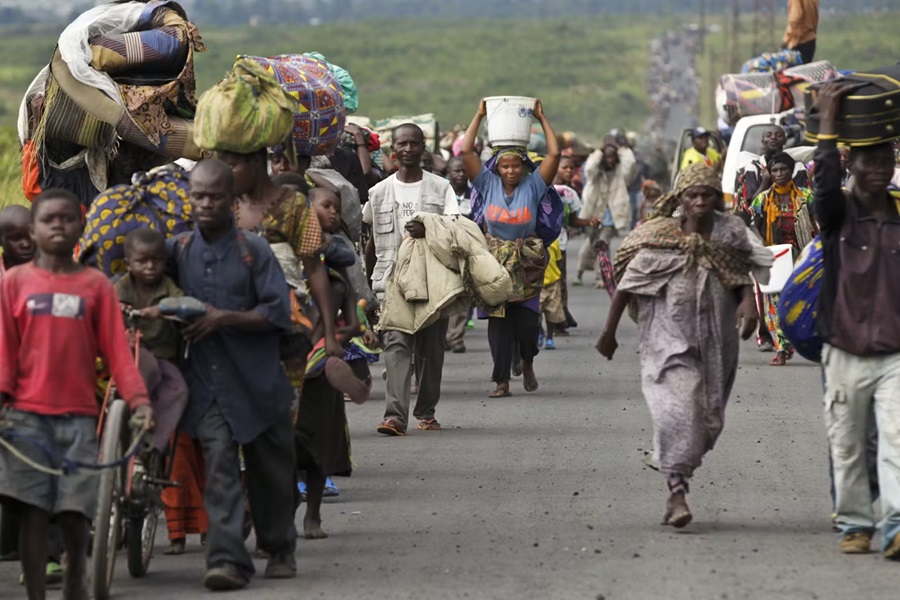
Refugee, Asylum Seeker or Internally Displaced Person?
One of the easiest mistakes to make in this debate is using these terms as though they mean the same thing.
They do not.
Refugee
A refugee has crossed an international border and requires international protection.
Under the 1951 Refugee Convention, a refugee is someone outside their country who cannot safely return because of a well-founded fear of persecution based on factors such as race, religion, nationality, political opinion or membership of a particular social group. The Convention and its 1967 Protocol form the foundation of the modern international refugee protection system.
However, this definition is especially important for African delegates to understand because Africa also has a broader regional definition.
The 1969 OAU Convention Governing the Specific Aspects of Refugee Problems in Africa includes people forced to leave their country because of external aggression, occupation, foreign domination or events seriously disturbing public order.
That means delegates should not simply say that anyone fleeing a war or natural disaster automatically becomes a refugee. The legal position depends on the circumstances and the international or regional law that applies.
Asylum Seeker
An asylum seeker is someone who has asked another country to recognise them as a refugee but whose claim has not yet been finally decided.
Not every asylum seeker will ultimately be recognised as a refugee.
Internally Displaced Person — IDP
An internally displaced person, usually called an IDP, has been forced to flee their home but has not crossed an international border.
For example:
Someone fleeing fighting in Sudan and crossing into Chad may become a refugee.
Someone fleeing the same fighting but remaining elsewhere inside Sudan is internally displaced.
IDPs remain inside their own country. This creates a difficult protection problem because the government responsible for protecting them may itself be involved in the conflict, may lack the ability to protect them or may struggle to allow humanitarian organisations access to affected areas.
International humanitarian law and human rights law still protect IDPs, and the UN Guiding Principles on Internal Displacement provide an important international framework for their treatment.
Why Are People Forced to Leave Their Homes?
People become displaced for many different reasons, and sometimes several causes happen at the same time.
Armed conflict can destroy homes, schools, hospitals, farms and businesses. Civilians may flee air strikes, fighting, armed groups, forced recruitment, sexual violence or attacks on their communities.
Persecution can force people to flee because of their religion, ethnicity, nationality, political beliefs or membership of a particular social group.
Humanitarian crises can also become much worse when conflict combines with food insecurity, economic collapse, destroyed infrastructure or climate-related disasters.
This matters in MUN because delegates should avoid looking for a single solution to every displacement crisis.
A family that has fled active fighting may urgently need shelter and physical protection. A refugee who has lived in another country for ten years may need employment, education and a path towards long-term stability.
The international response therefore has to deal with both immediate survival and long-term solutions.
The International Laws Delegates Should Know
You do not need to become an international lawyer before attending MUN, but understanding a few important frameworks can make your arguments much stronger.
The 1951 Refugee Convention and 1967 Protocol
These are the main global legal instruments for refugee protection.
One of their most important principles is non-refoulement.
Non-refoulement means that a person should not be returned to a territory where they face serious threats to their life or freedom. UNHCR describes this principle as the cornerstone of the Refugee Convention.
This becomes extremely important when delegates debate deportation, border closures, asylum systems and refugee returns.
International Humanitarian Law
International humanitarian law, sometimes called the law of armed conflict, protects civilians during war.
It limits how warfare may be conducted and protects civilians, including refugees and internally displaced people. It also places obligations on parties to armed conflicts relating to humanitarian relief and civilian protection.
Guiding Principles on Internal Displacement
Unlike refugees, IDPs do not have a worldwide treaty equivalent to the 1951 Refugee Convention specifically dedicated to their status.
The 1998 Guiding Principles on Internal Displacement therefore provide an important international framework covering protection against arbitrary displacement, protection during displacement and assistance in finding long-term solutions.
The Kampala Convention
African delegates should pay particular attention to the African Union Convention for the Protection and Assistance of Internally Displaced Persons in Africa, commonly known as the Kampala Convention.
It was adopted in 2009 and entered into force in 2012. It is particularly significant because it is a legally binding regional treaty specifically dealing with internal displacement in Africa.
The Global Compact on Refugees
The Global Compact on Refugees is designed to improve international cooperation around large refugee situations.
Its four main objectives are to:
- ease pressure on countries hosting large refugee populations;
- help refugees become more self-reliant;
- expand access to solutions in third countries; and
- support conditions that allow refugees eventually to return home safely and with dignity.
These objectives can be extremely useful when you are developing resolution ideas.
The Big Questions You Will Debate
Strong MUN debates happen when there is no easy answer.
This topic contains several major tensions.
National Sovereignty vs International Responsibility
Governments have primary responsibility for people within their territory.
But what should happen when a government cannot protect displaced civilians?
What if the government itself is accused of harming them?
Should international organisations be allowed to provide assistance without full government cooperation?
How far should the international community go before humanitarian assistance becomes interference in another country’s internal affairs?
There is unlikely to be one answer that every country will accept.
Border Security vs Refugee Protection
Governments have a legitimate interest in controlling their borders and protecting national security.
At the same time, people escaping persecution or war may not have passports, visas or opportunities to apply for permission before they flee.
Delegates therefore need to ask:
How can countries maintain secure borders without preventing people who genuinely need protection from accessing asylum?
Emergency Aid vs Long-Term Solutions
Food, water, medicine and shelter save lives during emergencies.
But displacement can last for years.
People also need schools, jobs, healthcare, identity documents, housing and opportunities to rebuild their lives.
A strong resolution should therefore not rely only on emergency aid.
Refugees vs Pressure on Host Communities
Countries hosting large refugee populations may face increased pressure on schools, hospitals, housing, water supplies and other public services.
Ignoring those pressures can increase resentment and tension between refugees and local communities.
This is why many modern refugee responses increasingly focus on programmes that benefit both displaced people and the communities hosting them.
Return vs Forced Return
Most refugees would prefer to live safely in their own country rather than remain permanently displaced.
But return should not happen simply because another country wants refugees to leave.
Delegates should ask whether conditions are actually safe and whether people are returning voluntarily and with access to housing, education, healthcare and livelihoods.
Humanitarian Access: More Complicated Than “Create a Corridor”
One solution delegates may hear frequently is the creation of a humanitarian corridor.
Humanitarian corridors or safe passages can allow civilians to leave dangerous areas or allow humanitarian assistance to enter. However, they usually require agreements between parties to the conflict and operate only in limited locations and for limited periods.
The ICRC stresses that they are not a complete solution. Civilians who cannot or do not want to leave still remain protected under international humanitarian law.
A stronger MUN proposal might therefore call for:
safe and impartial humanitarian access;
negotiated safe passages where necessary;
protection of humanitarian workers;
monitoring of attacks on aid operations; and
continued protection for civilians whether or not they evacuate.
That is much stronger than simply saying, “The UN should create humanitarian corridors everywhere.”
Crisis Areas Delegates Should Know
You do not need to memorise every refugee crisis in the world.
Instead, understand a few cases well enough to use them as examples.
Sudan
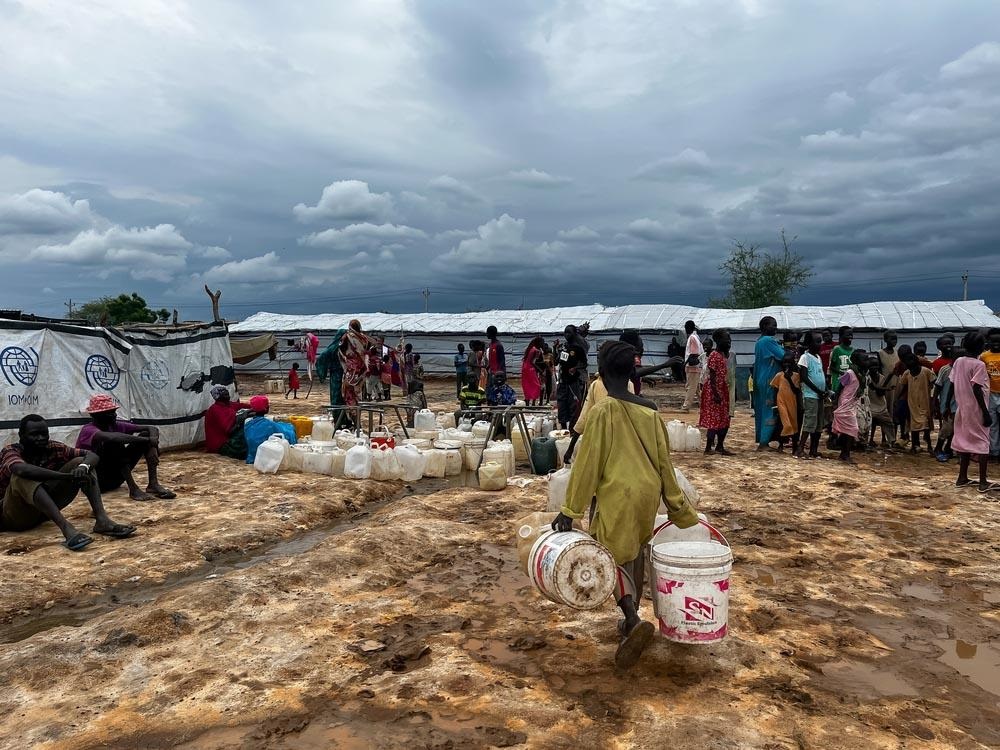
Sudan is particularly important for this debate. At the end of 2025, approximately 9.1 million people remained internally displaced within Sudan, making it the world’s largest internal displacement situation according to UNHCR.
Sudan raises questions about humanitarian access, civilian protection, neighbouring countries hosting refugees, food insecurity and what happens when displaced people return to areas where services and infrastructure have been severely damaged.
Democratic Republic of the Congo
Conflict and armed group activity have repeatedly displaced communities in the DRC. UNHCR reports that severe humanitarian and security problems in eastern DRC continued into 2026.
The DRC is useful for discussing long-term internal displacement, humanitarian access and the relationship between displacement and continuing conflict.
Other Important Situations
Delegates may also research Syria, Afghanistan, Ukraine, Myanmar and the occupied Palestinian territory.
The goal is not to know every statistic.
Instead, ask what each crisis teaches the international community about why displacement happens, what prevents people from returning and why different crises require different solutions.
How to Research Your Country Position
This is one of the most important parts of your preparation.
Remember: MUN is not a debate about your personal opinion.
You represent your assigned country.
Before the conference, find answers to questions such as:
- Does my country host large numbers of refugees?
- Have people fled my country as refugees?
- Does my country have internally displaced people?
- Has my country joined the 1951 Refugee Convention or 1967 Protocol?
- If it is an African country, what is its position on the OAU Refugee Convention and Kampala Convention?
- What are my country’s asylum and border policies?
- Does my government emphasise national sovereignty?
- Does my country donate money to humanitarian organisations?
- Has my country supported refugee resettlement?
- Which countries are likely to agree with my position?
- What solutions would my country probably reject?
Once you answer those questions, your position begins to become much clearer.
A major refugee-hosting country may emphasise international funding and responsibility-sharing.
A wealthy donor country may emphasise humanitarian funding, efficient aid systems, legal migration routes and border management.
A conflict-affected state may focus strongly on sovereignty, reconstruction and assistance for IDPs.
An African state may rely particularly on regional mechanisms such as the Kampala Convention.
What Strong Delegates Should Propose
Simply saying “we need to protect refugees” is not enough.
A strong MUN delegate explains who should act, what they should do, how it should be funded and how it could actually work.
You could propose stronger humanitarian access agreements between governments, armed actors and neutral humanitarian organisations.
You could propose greater international funding for countries hosting large refugee populations, particularly for schools, clinics, water systems and housing that serve both refugees and local communities.
You could support emergency identity documents and birth registration so that displaced people do not lose access to education, healthcare and legal protection.
You could propose stronger protection systems for unaccompanied children and measures to prevent trafficking, child recruitment and exploitation.
You could call for safe reporting systems and survivor-centred services for people experiencing gender-based violence.
You could support education programmes that allow displaced children to continue learning rather than losing years of schooling.
You could propose legal pathways such as family reunification, humanitarian admission, education opportunities or refugee resettlement.
And you can look beyond emergency assistance by proposing livelihoods, employment, reconstruction and peacebuilding programmes that reduce long-term dependence on humanitarian aid.
Building a Strong Resolution
A good resolution should address more than one part of the problem.
One useful structure is to build your resolution around five areas:
Emergency Protection: humanitarian access, shelter, healthcare, food, water and civilian protection.
Legal Protection: asylum procedures, documentation, non-refoulement and prevention of statelessness.
Vulnerable Groups: children, women, people with disabilities, older people and survivors of violence or trafficking.
Host Community Support: funding for schools, clinics, housing, water systems, infrastructure and employment.
Long-Term Solutions: voluntary return, refugee self-reliance, local integration where appropriate, resettlement, reconstruction and peacebuilding.
Compare these two ideas:
Weak:
“Countries should help refugees.”
Stronger:
“Calls upon Member States, international organisations and donors to expand financial and technical assistance to major refugee-hosting countries through programmes that strengthen education, healthcare, housing, water infrastructure and livelihoods for both displaced populations and host communities.”
The second proposal tells the committee who should act, what they should fund and who should benefit.
That is what turns an idea into a resolution.

Preparing Your Opening Speech
Your opening speech does not need to explain the entire refugee crisis.
It needs to make other delegates understand your country’s position.
A useful structure is:
First: explain how your country views the problem.
Second: identify the issue your country believes deserves priority.
Third: propose one or two solutions.
Finally: invite other delegations to cooperate.
For example:
Honourable Chair, distinguished delegates,
The delegation of [Country] recognises that protecting refugees and internally displaced persons requires both urgent humanitarian assistance and sustainable long-term solutions.
Our delegation believes that greater priority must be given to [your country’s priority]. We therefore support [solution one] and [solution two], while ensuring that humanitarian responses respect international law and the legitimate responsibilities of Member States.
The delegation of [Country] looks forward to working with other Member States towards a practical and balanced resolution.
Thank you.
Do not simply memorise a generic speech. Adapt it to your country’s real policies.
Common Mistakes to Avoid
Do not confuse refugees with IDPs. Refugees have crossed an international border; IDPs have not.
Do not assume every displaced person legally qualifies as a refugee.
Do not speak from your personal opinion instead of representing your assigned country.
Do not focus only on refugee camps. Many displaced people live in towns, cities and host communities.
Do not propose forced return simply because a conflict appears to be ending.
Do not ignore host countries and local communities.
Do not assume the United Nations can simply order countries or armed groups to do whatever the committee wants.
Do not propose a solution without considering money, implementation and political support.
And do not spend your entire speech describing how terrible the problem is.
Everyone in the committee already knows there is a problem.
Your job is to help solve it.
Final Advice for Delegates
This topic involves some of the most difficult questions international diplomacy has to answer.
Who is responsible for protecting people when their own government cannot?
How much responsibility should neighbouring countries carry?
Should wealthier countries take in more refugees?
When should displaced people return home?
How can humanitarian organisations reach people trapped by fighting?
How should states balance border security with the right to seek protection?
There will not be one perfect answer.
That is exactly why it is a strong Model United Nations topic.
Come to the conference knowing your country’s position, understanding the difference between refugees and internally displaced people and carrying at least three practical solutions that you would be willing to place into a resolution.
A good delegate can explain the crisis.
A stronger delegate can defend their country’s position.
But the best delegates do something more difficult: they find solutions that other countries can realistically agree to.
Learn More and Register
This topic will be debated at EduFleek’s upcoming High School Model United Nations conferences:
Johannesburg High School MUN – 12 September 2026, hosted at St David’s Marist Inanda.
Johannesburg High School MUN – Learn More & Register
Durban High School MUN – 19 September 2026, hosted at Deutsche Schule Durban.
Durban High School MUN – Learn More & Register
No previous Model United Nations experience is required. Delegates will take part in opening speeches, formal debate, negotiation, resolution drafting and voting while representing their assigned countries and working with other learners to develop practical responses to a major global challenge.