Model United Nations Student Guide
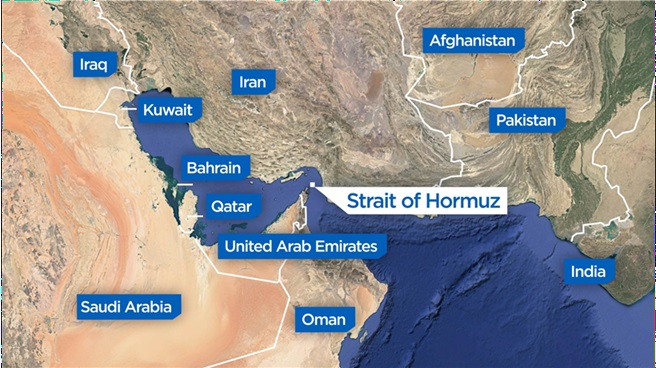
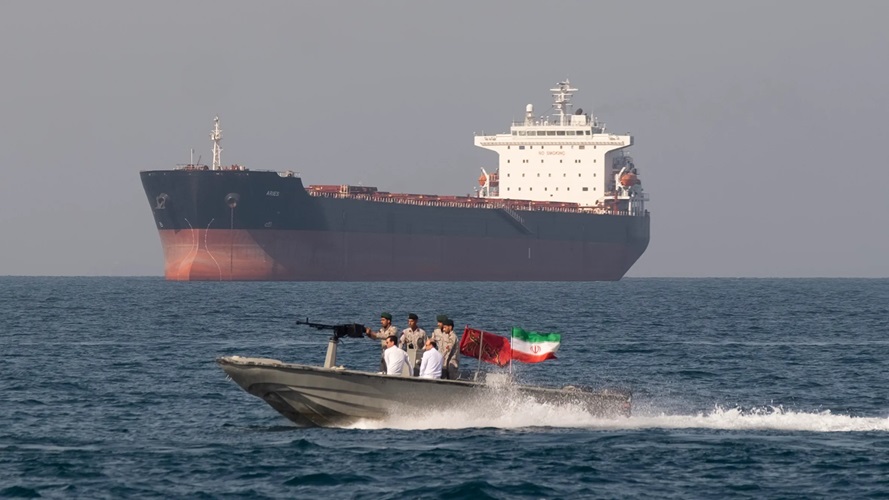
The Strait of Hormuz is one of the most important waterways in the world. It is a narrow sea passage between Iran to the north and Oman and the United Arab Emirates to the south. It connects the Persian Gulf to the Gulf of Oman, the Arabian Sea, and wider global shipping routes.
For this Model United Nations conference, delegates will debate the topic:
Addressing Threats to Maritime Security, International Law, and Global Energy Stability in the Strait of Hormuz
This topic asks students to think like diplomats. It is not only about one country or one conflict. It is about how the world should protect shipping, prevent war, respect international law, and keep global energy supplies stable.
Why the Strait of Hormuz Matters
The Strait of Hormuz is often described as a global “chokepoint”. A chokepoint is a narrow passage that large volumes of trade must pass through. If that passage is blocked or disrupted, the consequences can be felt around the world.
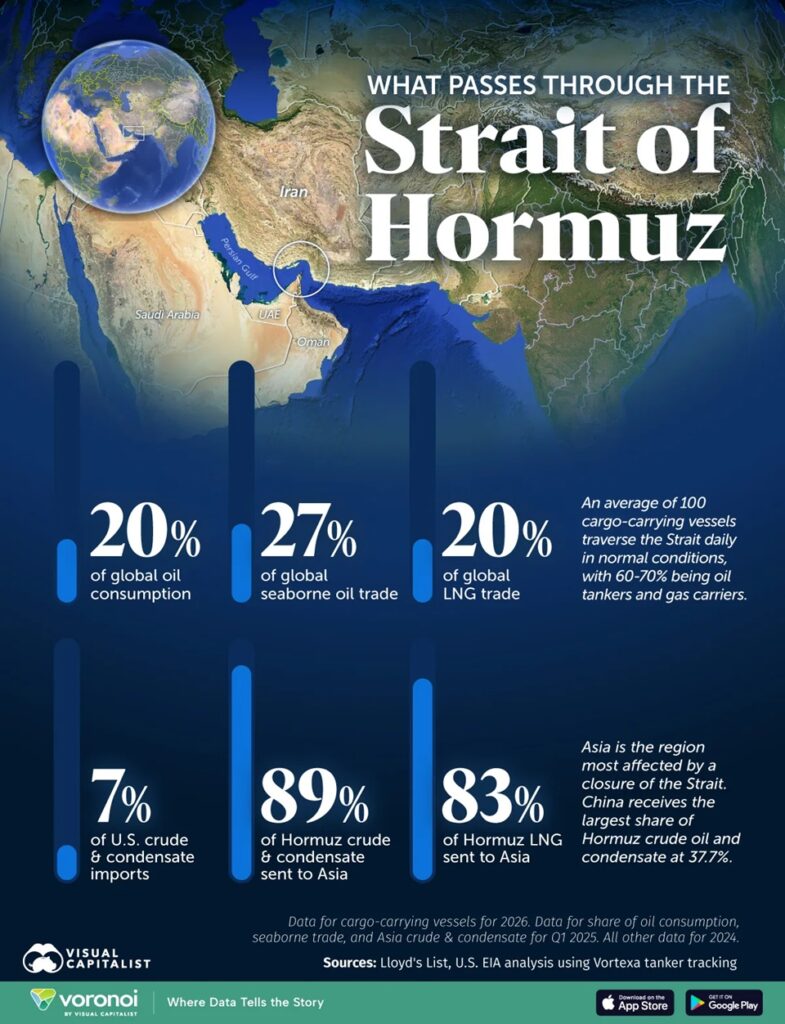
According to the International Energy Agency, around 20 million barrels per day of crude oil and oil products passed through the Strait of Hormuz in 2025. That represents about 25% of global seaborne oil trade. The strait is only 29 nautical miles wide at its narrowest point, with very narrow shipping lanes for vessels moving in and out.
This means that any conflict, blockade, attack, mining operation, or legal dispute in the Strait of Hormuz can affect:
- oil prices
- fuel prices
- global shipping
- energy security
- inflation
- food and transport costs
- the safety of civilian sailors
- relations between powerful countries
The U.S. Energy Information Administration reported that in 2024, oil flows through the strait averaged about 20 million barrels per day, equal to roughly 20% of global petroleum liquids consumption. It also noted that around one-fifth of global liquefied natural gas trade moved through the strait, mainly from Qatar.
In simple terms: if the Strait of Hormuz is disrupted, the whole world feels it.
The Current Situation
Tensions around the Strait of Hormuz have increased because of conflict involving Iran, the United States, Israel, regional Gulf states, and global shipping interests. Recent reports in April 2026 described vessel seizures, accusations of illegal blockades, threats to shipping, and calls at the United Nations for stronger protection of freedom of navigation.
The International Maritime Organization met in March 2026 to discuss the impact of the crisis on shipping and seafarers. The IMO condemned threats and attacks against vessels, called for international coordination, and urged the creation of a safe maritime framework to protect civilian ships and crews.
For MUN delegates, the key issue is this:
How can the international community keep the Strait of Hormuz open, protect civilian shipping, respect international law, and prevent military escalation?

Key Terms Students Need to Know
Maritime security means protecting ships, ports, sea routes, cargo, and crews from threats such as piracy, terrorism, mines, military attacks, unlawful seizures, smuggling, or blockades.
Freedom of navigation is the principle that ships should be able to move through international waters and key straits according to international law.
Transit passage is a legal right under the United Nations Convention on the Law of the Sea. It allows ships and aircraft to pass continuously and quickly through straits used for international navigation. UNCLOS says coastal states have sovereignty, but that sovereignty must be exercised subject to the rules governing international straits.
Energy security means having reliable and affordable access to energy. Countries depend on oil and gas for transport, electricity, industry, heating, and food supply chains.
Blockade is an attempt to prevent ships or goods from entering or leaving a place. In international law, blockades are highly sensitive because they can affect neutral countries and civilian trade.
Escalation means a conflict becoming more serious, for example moving from diplomatic tension to military confrontation.
The Legal Issue: Who Controls the Strait?
The Strait of Hormuz is bordered by Iran, Oman, and the United Arab Emirates. These states have important legal interests because the waters are close to their coastlines. However, the strait is also used for international navigation.
This creates a legal tension:
- Coastal states argue that they have sovereignty and security interests.
- Shipping nations argue that international law protects transit passage.
- Energy-importing countries argue that the strait must remain open for the global economy.
- Military powers argue over who has the right to patrol, escort ships, or enforce sanctions.
Under UNCLOS, the legal status of waters forming international straits is not erased, but the sovereignty of bordering states is subject to the rules of international law.
In debate, students should avoid saying simply “Iran owns the strait” or “foreign countries can do whatever they want.” The legal reality is more complicated. Coastal states have rights, but international navigation also has legal protection.
The Economic Issue: Why Oil and Gas Make This Global
The Strait of Hormuz matters because so much oil and gas moves through it.
The IEA says nearly 20 million barrels per day of oil were exported through the strait in 2025, and that limited alternative routes exist. It also notes that Qatar and the UAE’s LNG exports through the strait represent almost 20% of global LNG trade.
If the strait is disrupted, countries may face:
- higher petrol and diesel prices
- increased shipping insurance costs
- delayed imports and exports
- higher electricity and manufacturing costs
- pressure on poorer countries that cannot easily absorb fuel-price shocks
- instability in global markets
Asia is especially exposed. The EIA estimated that in 2024, China, India, Japan, and South Korea were among the main destinations for crude oil moving through the strait.
This means countries that are not physically near the Persian Gulf still have major interests in the debate.
The Human Issue: Seafarers and Civilian Ships
This topic is not only about oil, warships, and governments. It is also about people.
Civilian seafarers work on oil tankers, cargo ships, LNG carriers, and other vessels. When ships are trapped, attacked, seized, or delayed, crews may face danger, stress, fatigue, shortages of food and water, and difficulty communicating with families.
The IMO specifically called for protection of seafarers, continued provision of food, water, fuel, and essential supplies, and safe crew-change operations. It also warned about risks such as navigation-system jamming and spoofing.
A strong MUN resolution should therefore include humanitarian protection for seafarers, not only military or economic measures.
Main Stakeholders and Country Positions
Iran
Iran is one of the most important actors because it borders the strait and sees the waterway as linked to its national security. Iran may argue that foreign military activity, sanctions, or attacks against Iranian interests threaten its sovereignty. Iran may also argue that Western powers apply international law selectively.
However, other countries may accuse Iran of threatening freedom of navigation, seizing vessels, or using the strait as political leverage.
In debate, Iran is likely to support:
- respect for sovereignty
- opposition to Western military presence
- sanctions relief
- regional control of security arrangements
- condemnation of attacks on Iranian territory or vessels
Oman
Oman is a key coastal state and often acts as a mediator in regional disputes. Oman is likely to support de-escalation, dialogue, freedom of navigation, and respect for international law.
Oman may be a useful bridge between opposing blocs.
United Arab Emirates
The UAE depends heavily on shipping and energy exports. It has some pipeline capacity that bypasses the strait, but it still has a major interest in regional stability. The UAE may support maritime security cooperation while also trying to avoid a wider war.
Saudi Arabia
Saudi Arabia is a major oil exporter. It has pipeline routes to the Red Sea, but a major disruption in the Gulf would still affect its economy and global oil markets. Saudi Arabia is likely to support secure shipping lanes and measures against attacks on energy infrastructure.
Qatar
Qatar is one of the world’s most important LNG exporters. Its gas exports rely heavily on movement through the Strait of Hormuz. Qatar is likely to support peaceful de-escalation, safe shipping, and protection of LNG exports.
United States
The United States usually supports freedom of navigation, protection of global shipping, and opposition to threats against commercial vessels. It may support naval patrols, sanctions enforcement, and international coalitions to protect maritime routes. Recent reporting described U.S. calls at the UN for a coalition to protect maritime freedom.
China
China is a major energy importer and has a strong interest in keeping oil and gas flowing through the strait. However, China may be cautious about supporting Western-led military coalitions. It may prefer diplomatic solutions, non-interference, and UN-led frameworks.
India
India is also a major energy importer. It is likely to support freedom of navigation, stable oil prices, and protection of shipping, while avoiding being drawn too deeply into a military confrontation.
Japan and South Korea
Japan and South Korea depend heavily on imported energy. They are likely to support peaceful solutions, international law, safe shipping, and energy-market stability.
Russia
Russia may criticise Western military involvement and sanctions. It may argue for respect for sovereignty and diplomacy, while also using the issue to challenge U.S. influence.
European Union countries
EU states are likely to support freedom of navigation, protection of civilian shipping, de-escalation, and respect for international law. They may also focus on economic stability and humanitarian concerns.

Main Debate Questions
Students should prepare to answer these questions:
- Should the UN create a maritime monitoring mission in the Strait of Hormuz?
- Should military escorts be allowed for civilian ships?
- How can the world protect shipping without provoking war?
- Should coastal states have greater control over ships passing through nearby waters?
- How should the UN respond to vessel seizures or attacks on commercial ships?
- Should sanctions be discussed as part of maritime security?
- Who should pay for emergency energy measures if the strait is disrupted?
- How can seafarers be protected during conflict?
- Should regional countries lead the response, or should the UN lead it?
- What role should the International Maritime Organization play?
Possible Solutions for Delegates
A strong resolution should balance security, law, diplomacy, and economics. Delegates should avoid writing a resolution that only says “condemns” or “calls for peace.” They need practical mechanisms.
Possible solutions include:
1. UN-backed maritime de-escalation framework
This could include a neutral coordination mechanism between coastal states, shipping countries, and international organisations.
2. Safe maritime corridor
A resolution could propose clearly identified routes for civilian merchant vessels, with guarantees against attack or seizure.
3. Seafarer protection plan
This could include emergency evacuation, food and fuel supply, crew communication, and medical support.
4. Hotline between naval forces
A hotline could reduce the risk of accidental clashes between Iranian, Gulf, American, European, or other naval forces.
5. Independent investigation mechanism
The UN or IMO could investigate attacks, seizures, or mining incidents to establish facts before countries retaliate.
6. International monitoring mission
A non-combat monitoring mission could observe traffic, report violations, and improve transparency.
7. Mine-clearance cooperation
If mines are suspected, states could cooperate on mine detection and clearance under international supervision.
8. Emergency energy coordination
Energy-importing and exporting countries could coordinate strategic reserves, alternative supply routes, and support for vulnerable economies.
9. Dialogue forum for Gulf maritime security
A longer-term solution could create a regional forum involving Iran, Oman, the UAE, Saudi Arabia, Qatar, Iraq, Kuwait, and major shipping nations.
10. Protection of international law
A resolution could reaffirm the importance of UNCLOS principles, navigational rights, peaceful dispute resolution, and non-use of force.
What Makes This Topic Difficult?
This is a good MUN topic because there is no simple answer.
If countries send warships to protect shipping, that may improve security but increase the risk of conflict.
If countries avoid military action, shipping may remain vulnerable.
If the UN condemns one country too strongly, that country may refuse to cooperate.
If the UN does nothing, energy markets and civilian seafarers may suffer.
Delegates must therefore find a balance between:
- sovereignty and international navigation
- security and de-escalation
- sanctions and diplomacy
- regional leadership and global responsibility
- energy interests and humanitarian protection
Tips for Opening Speeches
A strong opening speech should include:
- your country’s main interest in the Strait of Hormuz
- your view on international law and freedom of navigation
- your position on military escalation
- one or two practical solutions
Example structure:
“Honourable Chair, distinguished delegates, the delegation of [country] believes that the security of the Strait of Hormuz is essential to international peace, lawful maritime trade, and global energy stability. As a country that [depends on energy imports / exports oil / borders the Gulf / supports international law], we are deeply concerned by threats to civilian shipping and the safety of seafarers. We call for [solution 1], [solution 2], and renewed diplomatic engagement to prevent further escalation.”
Tips for Country Research
Before the conference, students should research:
- Does my country import oil or gas from the Gulf?
- Does my country export energy through the region?
- Is my country close to Iran, the United States, China, Russia, or Gulf states?
- Does my country support sanctions on Iran?
- Is my country a party to UNCLOS?
- Does my country have a navy or commercial shipping interests?
- Has my country made recent statements on freedom of navigation?
- Would my country support a UN mission, regional dialogue, or military escorts?
Useful Phrases for Debate
Delegates can use phrases such as:
- “The delegation of [country] supports freedom of navigation in accordance with international law.”
- “We urge all parties to avoid actions that may escalate tensions.”
- “Civilian shipping and seafarers must never become targets in political disputes.”
- “Energy security is a global concern, not only a regional issue.”
- “Any solution must respect the sovereignty of coastal states while protecting international transit.”
- “We support a coordinated, UN-backed approach rather than unilateral military action.”
- “The international community must address both the immediate crisis and the long-term causes of instability.”
Possible Resolution Clauses
Students may use clauses like:
- Calls for the immediate protection of civilian commercial vessels and seafarers operating in and around the Strait of Hormuz;
- Urges all states to respect navigational rights and freedoms in accordance with international law;
- Encourages the establishment of a UN-supported maritime communication hotline between relevant naval forces;
- Requests the International Maritime Organization to coordinate a safe-passage framework for affected merchant vessels;
- Supports the creation of an independent investigation mechanism for reported attacks, seizures, or threats against commercial shipping;
- Recommends the development of emergency energy coordination measures to reduce the global impact of disruptions;
- Calls upon regional and international actors to pursue diplomatic negotiations and avoid further military escalation.
Conclusion
The Strait of Hormuz is small in size but enormous in global importance. It connects regional security, international law, energy markets, shipping safety, and diplomacy.
For this Model United Nations debate, students must think beyond simple blame. The strongest delegates will understand the interests of different countries, the importance of international law, the economic risks of disruption, and the human impact on seafarers.
The central challenge is clear:
How can the world keep the Strait of Hormuz open, lawful, and safe without turning a maritime crisis into a wider war?
Participate
We invite your school to participate in the Johannesburg Model United Nations conference, on 16 May 2026 at St David’s Marist Inanda.