

Rainfall is one of the most important parts of the water cycle. It gives us fresh water, helps crops grow, fills rivers and dams, and shapes the climate of different places. But have you ever wondered why it rains more in some areas than others, or why some rain falls as light drizzle while other rain comes down in heavy storms?
The answer lies in how the rain forms.
In Geography, high school students usually learn about three main types of rainfall: convectional rainfall, relief rainfall, and frontal rainfall. Each type forms in a different way, depending on how air rises, cools, and condenses.
In this article, we will explain the types of rainfall and how they form, using simple examples to help you understand the process clearly.
What is rainfall?
Rainfall is a type of precipitation. Precipitation is any form of water that falls from clouds to the Earth. This includes rain, hail, sleet, and snow.
Rainfall happens when water vapour in the atmosphere cools and condenses into tiny water droplets. These droplets gather in clouds. When they become too heavy to stay in the air, they fall to the ground as rain.
How does rain form?
Before we look at the different types of rainfall, it is important to understand the general process of rain formation.
Rain usually forms in the following steps:
1. The Sun heats water on Earth
The Sun heats water in oceans, rivers, lakes, dams, and even wet soil. This causes water to evaporate and turn into water vapour.
2. Warm air rises
Warm air is lighter than cold air, so it rises into the atmosphere. This rising air carries water vapour with it.
3. The air cools as it rises
As the air rises higher, it expands and cools. Cooler air cannot hold as much water vapour as warm air can.
4. Condensation takes place
The water vapour changes into tiny liquid droplets. This process is called condensation. These droplets gather to form clouds.
5. Rain falls
When the droplets in the cloud join together and become large and heavy, they fall to the ground as rainfall.
The main difference between the types of rainfall is what causes the air to rise in the first place.
The three main types of rainfall
The three main types of rainfall are:
- Convectional rainfall
- Relief rainfall
- Frontal rainfall
Let’s look at each one in detail.
1. Convectional rainfall
What is convectional rainfall?
Convectional rainfall happens when the Sun heats the Earth’s surface strongly, causing the air above it to become warm and rise quickly.
This type of rainfall is common in hot areas and often happens in the afternoon after the land has been heated for several hours.
How convectional rainfall forms
Here is the step-by-step process:
- The Sun heats the ground.
- The ground heats the air above it.
- The warm air rises rapidly.
- As the air rises, it cools.
- The water vapour condenses into clouds.
- Tall clouds called cumulonimbus clouds may form.
- Heavy rain falls, often with thunder and lightning.
Features of convectional rainfall
Convectional rainfall is usually:
- Heavy
- Short-lived
- Often accompanied by thunderstorms
- Common in summer
- More likely in places where the surface gets very hot
Example of convectional rainfall
Convectional rainfall is common in the interior of South Africa during summer, where hot temperatures often lead to afternoon thunderstorms.
Easy way to remember it
Think of convectional rainfall as heat-driven rainfall. The hotter the land gets, the more likely warm air is to rise and form this kind of rain.

2. Relief rainfall
What is relief rainfall?
Relief rainfall happens when moist air is forced to rise over a mountain or high area of land.
It is called “relief” rainfall because it is caused by the relief of the land, meaning the shape and height of the landscape.
How relief rainfall forms
Here is how it happens:
- Moist air blows from the sea or another water source toward a mountain.
- The mountain blocks the air and forces it to rise.
- As the air rises, it cools.
- Condensation takes place and clouds form.
- Rain falls on the side of the mountain facing the wind.
The side of the mountain that receives rain is called the windward side.
After the air passes over the mountain, it begins to descend on the other side.
- As the air descends, it warms up.
- Warmer air can hold more moisture, so clouds disappear.
- Little or no rain falls on this side.
This drier side is called the leeward side and is often in a rain shadow.
Features of relief rainfall
Relief rainfall is usually:
- Found in mountainous areas
- Heavier on the windward side
- Much lighter on the leeward side
- Caused by physical barriers like mountains
Example of relief rainfall
A good example is when moist air from the ocean is forced up the Drakensberg Mountains. The windward slopes receive more rain, while the leeward side is much drier.
Easy way to remember it
Think of relief rainfall as mountain rainfall. The mountain forces the air to rise, and that rising air leads to rain.
.

3. Frontal rainfall
What is frontal rainfall?
Frontal rainfall happens when two different air masses meet. Usually, one air mass is warm and the other is cold.
The boundary between the two air masses is called a front.
Because cold air is denser and heavier, it pushes underneath the warm air and forces the warm air to rise. As the warm air rises, it cools, condenses, and forms rain.
How frontal rainfall forms
Here is the step-by-step process:
- A warm air mass meets a cold air mass.
- The colder, denser air moves underneath the warm air.
- The warm air is forced to rise.
- As it rises, it cools.
- Water vapour condenses into clouds.
- Rain falls along the front.
Features of frontal rainfall
Frontal rainfall is usually:
- Spread over a large area
- Can last for a long time
- Often steady and gentle, although it can also be heavy
- Common in temperate regions
- Associated with weather fronts and changing weather systems
Example of frontal rainfall
In South Africa, frontal rainfall is common in the Western Cape during winter, when cold fronts move in from the Atlantic Ocean.
Easy way to remember it
Think of frontal rainfall as meeting-point rainfall. It forms where warm and cold air masses meet.

What is the difference between the three types of rainfall?
The easiest way to compare them is to focus on what makes the air rise.
| Type of Rainfall | What causes the air to rise? | Common features |
|---|---|---|
| Convectional rainfall | The ground is heated by the Sun | Heavy, short showers, thunderstorms |
| Relief rainfall | Air is forced over mountains | Rain on windward side, dry leeward side |
| Frontal rainfall | Warm air is forced above cold air | Widespread, longer-lasting rainfall |
This comparison is very useful for tests and exams.
Why is understanding rainfall important?
Knowing the types of rainfall helps us understand:
- Why some places get more rain than others
- Why certain areas are wetter in summer or winter
- How mountains affect climate
- Why storms happen in some places
- How rainfall influences farming, water supply, and settlement patterns
Rainfall patterns also affect people’s daily lives. Farmers need reliable rainfall for crops. Cities need rainfall to fill dams. Too much rainfall can cause flooding, while too little can lead to drought.
That is why rainfall is such an important topic in Geography.
Rainfall and South Africa
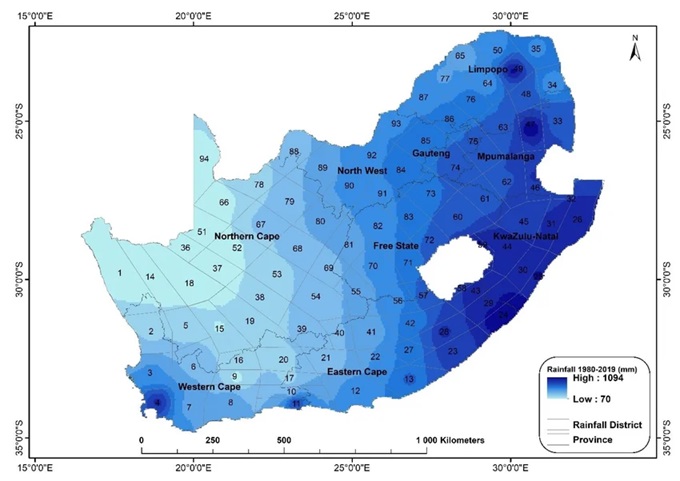
South Africa is a great example of how different rainfall types affect different regions.
Summer rainfall region
Much of the interior receives convectional rainfall in summer. This often comes in the form of afternoon thunderstorms.
Winter rainfall region
The Western Cape receives most of its rain in winter, mainly through frontal rainfall caused by cold fronts.
Mountain areas
Areas near mountains can experience relief rainfall, especially where moist air is pushed upward by high land.
This is one reason why South Africa has such varied climates across different provinces.
How to answer exam questions on types of rainfall
When answering Geography questions, do not just name the rainfall type. Explain the process clearly.
For example:
If asked: “Describe how convectional rainfall forms”
A strong answer would be:
Convectional rainfall forms when the Sun heats the Earth’s surface. The air above the ground becomes warm and rises. As it rises, it cools. The water vapour condenses to form clouds, and when the droplets become large and heavy, rain falls.
Helpful exam tip
Use process words such as:
- heats
- rises
- cools
- condenses
- forms clouds
- falls as rain
These words help show that you understand the sequence.
Common mistakes students make
Here are some mistakes to avoid:
1. Mixing up relief and frontal rainfall
Relief rainfall is caused by mountains. Frontal rainfall is caused by air masses meeting.
2. Forgetting the role of cooling
Rain does not form just because air rises. It forms because rising air cools, and cooling leads to condensation.
3. Not mentioning condensation
Condensation is a key part of rain formation. Without it, clouds and rain cannot form.
4. Writing incomplete definitions
Always explain both what causes the air to rise and how that leads to rainfall.
Quick summary of the types of rainfall
Let’s recap:
- Convectional rainfall happens when the Sun heats the ground, causing warm air to rise, cool, and produce rain.
- Relief rainfall happens when moist air is forced up a mountain, cools, and drops rain on the windward side.
- Frontal rainfall happens when warm air meets cold air and is forced to rise above it, cool, and produce rain.
The key idea in all three types is this:
Air rises, cools, condenses, and then rain falls.
What changes is why the air rises.
Final thoughts
Understanding the types of rainfall and how they form is an important part of high school Geography. It helps you make sense of weather patterns, climate differences, and how the natural environment works.
Once you remember the three main causes of rising air, the topic becomes much easier:
- Heat causes convectional rainfall
- Mountains cause relief rainfall
- Fronts cause frontal rainfall
If you can explain those three clearly, you will be in a strong position for classwork, assignments, and exams.
Frequently Asked Questions about Types of Rainfall
What are the three main types of rainfall?
The three main types of rainfall are convectional rainfall, relief rainfall, and frontal rainfall.
Which type of rainfall is common in hot areas?
Convectional rainfall is common in hot areas because strong heating causes warm air to rise rapidly.
Which type of rainfall happens near mountains?
Relief rainfall happens near mountains because the land forces moist air to rise.
What is a front in Geography?
A front is the boundary where two different air masses meet, usually warm air and cold air.
Why does air need to cool for rain to form?
When air cools, it cannot hold as much water vapour. The vapour condenses into droplets, which form clouds and eventually rain.
High School Study Resources and WhatsApp Bots
Study with us and get free access to High School study resources and WhatsApp Bots.


